Published 21 September 2026 · General Scheme of the Irish Nationality and Citizenship (Amendment) Bill 2026
The General Scheme is out. It is a lot more than eight years.69
Ten Heads and a Schedule, 22 pages, from the Department of Justice, Home Affairs and Migration. This is the outline the Bill will be drafted from, and the document the Justice Committee scrutinises. What it does:
- Eight years, not fiveTwo years’ continuous residence plus six in the previous ten, instead of one plus four in eight.Head 5
- Nothing for people already hereThe only saving clause covers applications already lodged. No transitional provision for anyone resident and still counting.Head 9(2)
- Spouses of Irish citizens: five years, not threeTwo continuous, three in the previous five.Head 6
- A language testIrish, English or Irish Sign Language, to a standard the Minister sets by regulation. Waivable for categories the Minister prescribes.Heads 5, 6 and 8
- A civics test“Knowledge and understanding of Irish civics”, again to a standard set later by regulation.Heads 5 and 6
- An income floor and a welfare barA minimum income the Minister prescribes. No prescribed social welfare or housing support in the two years before applying, six months forgiven. No Revenue or welfare debt, no unpaid court fine.Heads 5 and 7
- The conditions run until the decisionResidence, income and the welfare bar have to hold for the whole wait, not just on the day you apply.Head 5(j)
- Time that stops countingTemporary Protection (the Ukraine scheme), EU treaty-rights applications later refused, and any “temporary or limited duration” permission the Minister names in future.Head 9
- A new ground to strip citizenship“Public policy, public order or national security”, added to the revocation section.Head 10
- Commencement by ministerial orderAny part, on any day the Minister appoints, different days for different parts.Head 2
Status
It is not law yet. There is still time.
This is the stage where a saving clause for people already here can still go in. Last December’s change to the international protection route had exactly that1, so it is not a strange ask. Eight organisations have already said no, together.14
What eight years actually means
Same arrival, five very different waits.
Picture someone who lands in Dublin this January. Whether she gets her passport in 2031 or 2038 has nothing to do with how she lives here. It comes down to the stamp she was given on the way in. Deliberately Éire did the sums for five of them, and they’re worth a slow look.
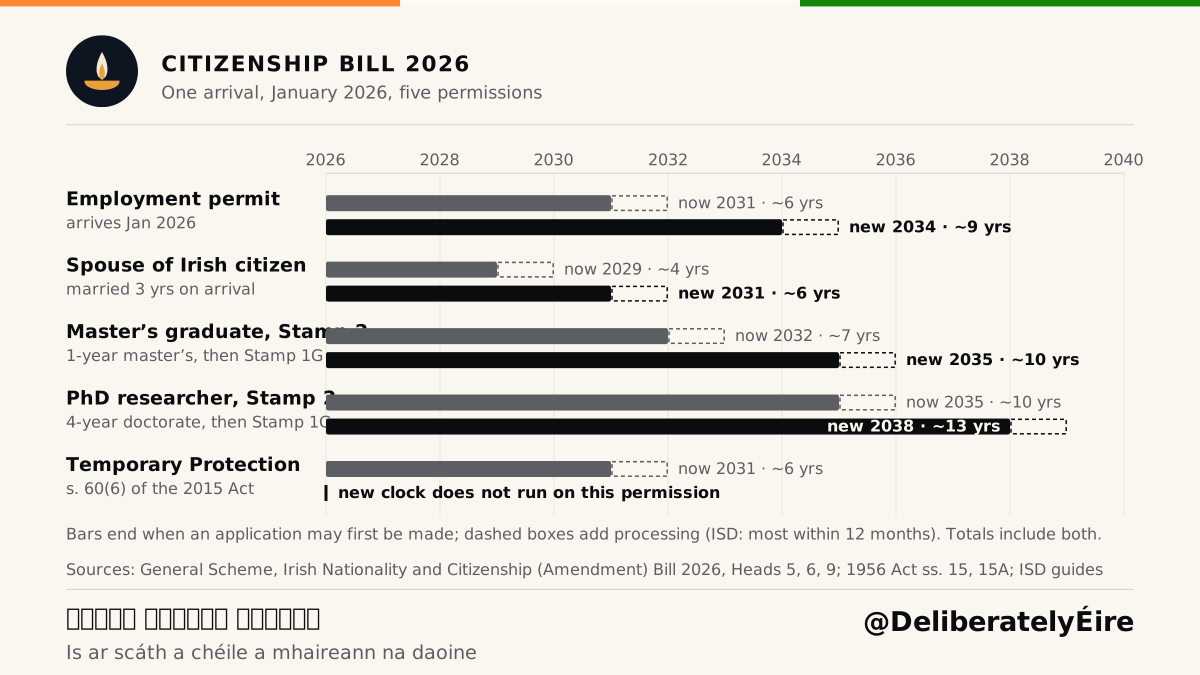
- The grey bar is today’s rule. It runs from the day she arrives to the first day she can apply under the five-year rule we have now.
- The black bar is the Scheme. The same person, the same stamp, but the first day she can apply if the eight-year rule goes through.
- The dashed box is the wait for an answer. Applying isn’t the end of it. Most decisions take about a year, some a lot longer.
- No black bar at all means the clock never starts. On Temporary Protection the Scheme stops those years counting, so there is no date to draw.
- The total beside each bar is the whole thing: years from the day she landed to the day she most likely gets an answer.
Three years longer for most people. Twelve, if you came to do a PhD. On a work permit she’d be applying in 2031 today; the Scheme makes it 2034. Married to an Irish citizen, 2029 becomes 2031. Time on a student stamp doesn’t count in either world, so someone who does a master’s and a doctorate here won’t get to apply until 2038, twelve years after she arrived. And if she came on Temporary Protection, the new clock doesn’t start at all.
The chart is by Deliberately Éire, from their guide to the Scheme, which is worth reading in full. Find them on X at @delibratelyEire.